Sign in. It’s quick, free and it’s up to you.
An account is an optional way to support the work we do. Find out more.
Sign in. It’s quick, free and it’s up to you.
An account is an optional way to support the work we do. Find out more.
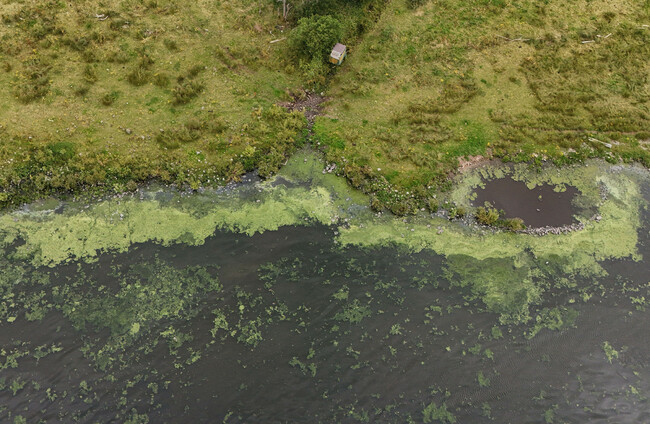
BACTERIA COMMONLY ASSOCIATED with faeces from livestock or human effluent has been discovered around the bank of Lough Neagh, prompting public health concerns.
Researchers from Queen’s University Belfast studied the green algal mats that line the banks around the shore of Lough Neagh, highlighting the profound ecological impact and significant environmental and public health risks that blue-green algae in Lough Neagh present.
The lead author, Dr Neil Reid said “these results confirm Lough Neagh as ‘hypertrophic’ which is the worst category of waterway nutrient pollution, indicative of decades of agricultural, industrial and domestic runoff”.
“Our results are consistent with claims of faecal contamination of Lough Neagh and its tributaries”, he continued, suggesting that the most likely cause of the contamination is from farm livestock and wastewater treatment plants
Over 80% of the bacterial DNA recovered from the algal mats along the banks of Lough Neagh belonged to potentially hazardous microbes, including E.coli and Salmonella.
A large array of toxins was also detected in the study, including one that had previously never been found on the island of Ireland.
Another toxin, known as Microcystin-LR, was found to exceed the recreational exposure limit set by the World Health Organisation at every sample site tested. These toxins can cause damage to the human liver, nerves and brain and can even result in severe illness and death at high doses.
The presence of these toxins may have also contributed to the death of animals such as dogs that entered the water last summer, the study suggests.
The researchers argue that their results indicate reducing agricultural runoff and discharge from human wastewater treatment plants needs to be a top priority for local stakeholders and government.
“Technological solutions to better use of slurry as well as good on-farm wastewater management is needed urgently on most farms”, Dr Reid said, calling farmers key to the ecological restoration and recovery of the area.
Dr Reid also suggested using nature-based solutions, “such as planting vegetation and leaving buffer strips along waterways or creating drainage swales, willow plantations and reedbeds could dramatically reduce the environmental footprint of farming avoiding any conflict with the productivity and profitability of the agriculture sector”.
Lough Neagh is Ireland and the UK’s largest freshwater lake and provides more than 40% of Northern Ireland’s drinking water. It also supports Europe’s largest commercial eel fishery and drains around 40% of Northern Ireland’s land, much of which is agricultural.

To embed this post, copy the code below on your site
















have your say